


Blog
How to Choose the Best Power Bank for Your Daily Use?

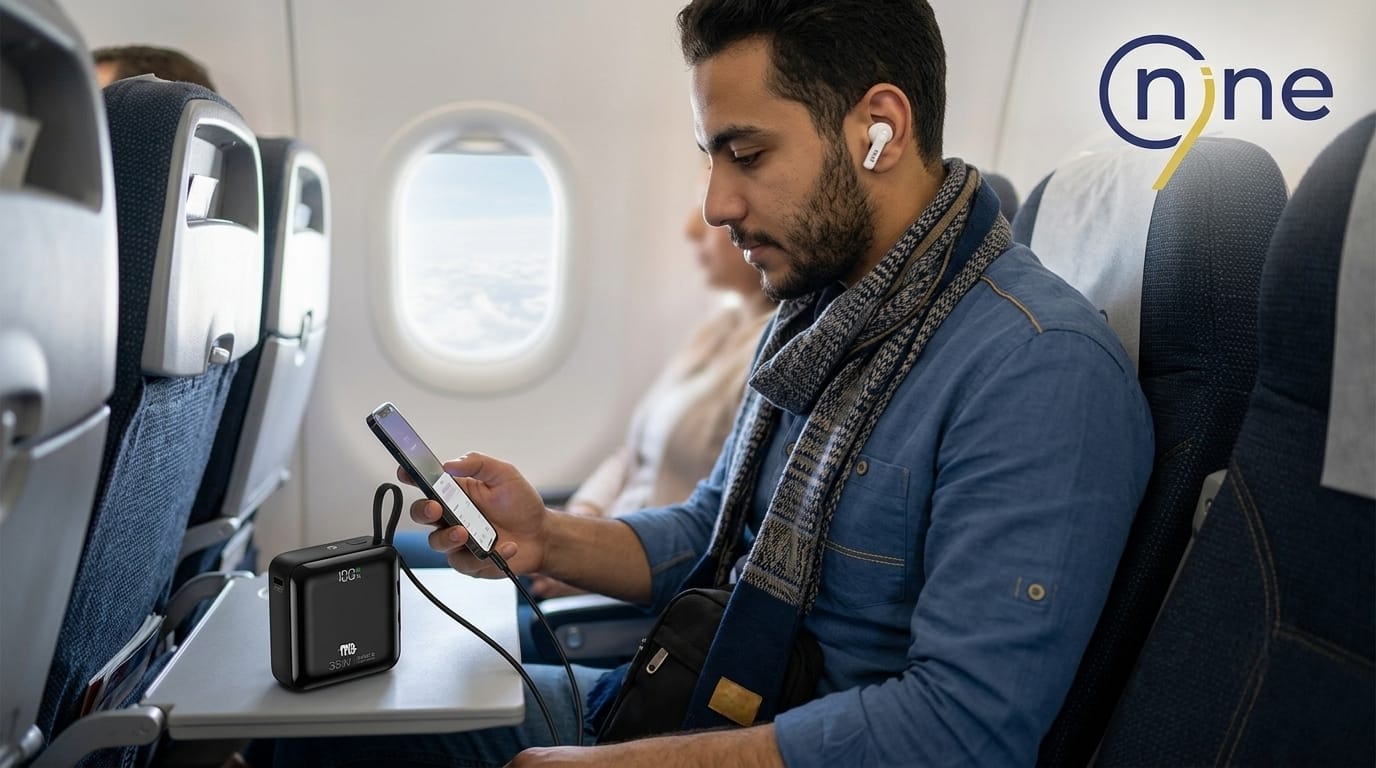
You start your day with a fully charged phone, but after only a few hours, you find yourself searching for a charger or power outlet again, as if your battery can never last through the day, no matter how carefully you use it. The problem is not always your phone. Sometimes the real issue is choosing the wrong power bank, which can make your experience worse instead of solving the problem, whether because of battery capacity, charging speed, or the number of charging ports.
This is why understanding what to look for before buying is important, so you can avoid making a random choice that leaves you without power when you need it most.
How Do You Choose the Best Power Bank in Egypt for Daily Use Without Confusion?
Choosing the right power bank is no longer as simple as it used to be. Different battery capacities, charging speeds, and port options mean every power bank is designed for a different type of user. Understanding these differences helps you make a smarter decision before buying.
Choose Capacity Based on Your Daily Usage
Choosing capacity is not simply about buying the biggest number. If you only need one extra charge during the day, smaller capacity power banks are usually enough and easier to carry.
If you work long hours, travel often, or depend heavily on your phone, a larger capacity power bank gives you more freedom without constantly worrying about battery life.
Fast Charging Makes a Big Difference
Not every power bank offers real fast charging. Actual performance depends on whether the power bank supports fast charging technology and whether it is compatible with your phone.
Choosing the right option gives you faster charging and better efficiency, especially when you are short on time.
More Ports Give You More Flexibility
If you only charge one device, a single port may be enough. But having multiple ports allows you to charge more than one device at the same time, such as your phone, earbuds, or even a second device.
This becomes especially useful during travel or long workdays outside the house.
Travel Requires the Right Balance
When traveling, it is not enough for a power bank to simply be small or powerful. It should combine the right battery capacity with reliable performance. The longer you stay away from power outlets, the more important it becomes to choose a power bank capable of charging multiple times without constantly needing to recharge itself.
The right choice gives you convenience, freedom, and reliable power wherever you go.
Power Bank Capacity Guide: How to Choose the Right Size for Your Smartphone (5000 – 20000 mAh)
Choosing the right power bank capacity depends on how often you use your phone, how long you stay away from charging outlets, and whether you need backup power for travel or heavy daily use.
| Feature | ||
|---|---|---|
| Best Capacity For | Light use and daily emergencies | Heavy use and long travel |
| Phone Charging Times | Around 1 full charge | Around 3 to 5 charges, depending on the phone |
| Charging Speed | Good speed for quick daily charging | Ultra-fast charging up to 65W |
| Number of Ports | Single port with ultra-light design | Multiple ports for charging several devices |
| Daily Use | Perfect for a pocket or small bag | Ideal for work, study, and multiple devices |
| Travel Usage | Not ideal for long trips | Best option for travel and long movement |
| Size and Weight | Very compact and lightweight | Larger size but more powerful |
| Best For | Emergency charging and quick backup | Travel, multiple devices, and long-term use |
What Is the Best Power Bank Capacity for Daily Charging?
Choosing the right power bank size isn’t about buying the highest number. It depends on how you use your phone during the day. If you use your phone lightly and only need one extra charge before the end of the day, smaller capacity power banks are usually enough and easier to carry.
If you use your phone heavily for browsing, work, communication, or social media, you will need a medium capacity that gives you at least one full extra charge without worrying about battery life. If your daily routine includes traveling, long outdoor hours, or charging multiple devices, larger capacity power banks become a better option because they provide longer-lasting and more reliable backup power.
The goal is not to buy the biggest battery capacity, but to choose the one that fits your real daily needs and gives you uninterrupted convenience.
Practical Comparison Between Power Bank Capacities: Which One Is Better for Personal Use or Travel?
Different power bank sizes are designed for different lifestyles. The right choice depends on whether you need simple backup charging or all-day power support.
| Feature | Nine AIRMAG POWER MY15 power bank 5000mAh | |
|---|---|---|
| Main Advantage | Extremely lightweight and easy to carry | Higher power and all-day reliability |
| Daily Usage | Quick emergency charging | Full day use without battery worries |
| Wireless Charging | Practical for light daily use | More stable with stronger performance |
| Charging Times | Around 1 full phone charge | Around 1 to 2 full phone charges |
| Portability | Perfect for a pocket or small bag | Good for daily bags and short travel |
| User Experience | Fast charging with almost no extra weight | Reliable battery support all day |
| Best For | Light users or emergency backup | Active users who depend heavily on their phones |
Choosing the correct power bank means matching your device, daily routine, and charging habits instead of simply focusing on the highest battery number.
How to Choose a Power Bank That Delivers Real Fast Charging, Not Just Big Numbers?
Choosing a fast charging power bank is not simply about the numbers printed on the package. Real charging speed depends on the charging technology, compatibility with your phone, cable quality, and the actual power output. True fast charging is something you experience in real use, not just in technical specifications.
Look for Fast Charging Technologies, Not Just Capacity
A high battery capacity or a large printed number does not automatically mean faster charging. The most important factor is whether the power bank supports technologies such as Power Delivery (PD) or other fast charging standards compatible with your phone.
These technologies control how efficiently power moves from the power bank to your device and determine whether you actually get fast charging performance or simply standard charging with a large battery capacity.
Make Sure the Power Bank Matches Your Phone
Even the most powerful power bank will not deliver maximum charging speed if it is not compatible with your device.
The connection between the phone and the power bank determines how much power the device can safely receive. Compatibility ensures you benefit from the full charging capability instead of getting reduced performance.
The Cable Is Just as Important as the Power Bank
Many users focus on the power bank and ignore the charging cable, but a low-quality cable can significantly reduce charging speed. To get the real fast charging performance, you need a cable designed to handle higher power transfer efficiently and maintain stable charging without energy loss.
Capacity Does Not Mean Faster Charging
A larger battery capacity simply means more stored energy, but it does not guarantee faster charging. The real factor that controls charging speed is the power output (Wattage). A power bank with higher output power can charge your phone faster and more efficiently, especially for daily use or while traveling.
Fast Charging Technologies in Power Banks (PD vs Quick Charge): Which One Should You Choose?
Choosing a fast charging power bank is not about recognizing the technology name only. The difference between normal charging and truly fast charging begins with understanding the device’s charging protocol.
Power Delivery (PD): The Modern Standard
Power Delivery (PD) offers smarter and more efficient charging by dynamically adjusting power based on the connected device. This significantly reduces charging time and provides a more stable charging experience, especially with modern smartphones, tablets, and advanced USB-C devices.
Quick Charge (QC): Ideal for Many Android Devices
Quick Charge (QC) is widely used across Android smartphones, especially devices powered by Qualcomm processors. It increases charging speed by gradually raising power output safely, allowing faster charging compared to standard chargers while maintaining battery safety.
Output Power (Watt) Is the Real Speed Factor
Having PD or QC support alone is not enough. The actual charging speed depends on how much output power the power bank can deliver. Higher wattage means faster charging, as long as your device and cable support that power level.
Always Check Compatibility Before Buying
Even with PD or QC support, your phone must support the same charging protocol to unlock maximum charging speed. Without compatibility, charging performance automatically drops below the expected level.
How Many Charging Ports Do You Really Need?
The number of charging ports directly affects how flexible the power bank will be in your daily routine.
Single Port: Best for Basic Users
If you mainly use one smartphone and only need emergency charging during the day, a single-port power bank is usually enough. It keeps the design lightweight and easy to carry.
Dual Ports: The Balanced Daily Choice
Two ports work well if you regularly charge your phone along with another device like wireless earbuds or a smartwatch. This gives flexibility without heavily affecting charging performance.
Three Ports: Maximum Flexibility
If you rely on multiple devices daily, three ports allow you to charge your smartphone and accessories at the same time. This is especially useful during travel or long workdays.
Smart Power Distribution Matters More Than Port Count
The number of ports alone is not everything. A good power bank intelligently distributes power between connected devices to maintain a stable charging speed even when multiple devices are connected.
USB-C vs USB-A: Which Port Is Better?
Choosing the charging port type is now one of the most important buying decisions.
USB-A works well for older devices and standard charging but offers limited flexibility with modern technology.
USB-C, as the best Type C power bank, has become the smarter option because it supports faster charging, better power delivery, and allows faster charging of both your phone and the power bank itself.
The best option for most users is choosing a power bank that includes both USB-C and USB-A, such as an i Phone power bank, giving you maximum flexibility for charging multiple devices without worrying about cable compatibility.
How to Choose a Lightweight but Powerful Power Bank for Daily Travel?
The best phone power bank should balance battery capacity, weight, and performance.
Choose Practical Capacity Instead of Maximum Capacity
Selecting a capacity based on your actual daily needs gives you a lighter and more convenient device without unnecessary extra weight.
Compact Design Improves Portability
Smaller and thinner designs are easier to carry in your pocket or bag, making them ideal for commuting and daily movement.
Real Performance Comes from Charging Technology
High efficiency charging technology can deliver faster charging in a smaller device, reducing the need for oversized, heavy power banks. The best choice is always the one that provides reliable charging without slowing down your movement during work, travel, or daily activities.
Best Power Bank Features for Travel
When choosing a power bank for travel, several features become essential.
- Large enough capacity to recharge your phone multiple times
- Fast charging support to save time during short stops
- Durable design built for daily movement and frequent use
- Multiple ports for charging several devices simultaneously
- Compact size that fits easily inside a travel bag
A travel power bank should provide freedom from constantly searching for power outlets and allow you to stay connected during long journeys.
Important Safety Features You Should Never Ignore
Choosing a safe power bank protects both your phone and battery health over the long term.
Automatic Charge Cut-Off
A good power bank automatically stops charging once the battery is full, preventing unnecessary battery stress.
Temperature Control Protection
Heat is one of the biggest factors that affects battery life. Built-in thermal management keeps charging stable and reduces overheating during extended use.
Overcurrent Protection
This feature prevents excessive electrical current from reaching your device and protects internal phone components from sudden electrical damage.
High Quality Internal Battery Cells
The quality of internal battery cells determines long-term safety and charging efficiency. Better battery cells reduce the risk of overheating, swelling, performance loss, or sudden failure.
Frequently Asked Questions
Can I use a power bank while charging the power bank itself?
Yes, some models support pass-through charging, allowing simultaneous charging and usage, but extended use may increase heat.
Does daily power bank use damage phone battery life?
No, daily use is safe if the power bank is high-quality and includes proper protection systems that deliver stable power similar to a normal charger.
How long does a power bank take to recharge fully?
Charging time depends on battery capacity and charger speed. On average, most power banks take 3 to 8 hours to charge, and models with fast USB-C input recharge much faster.

